Enchodus Fang

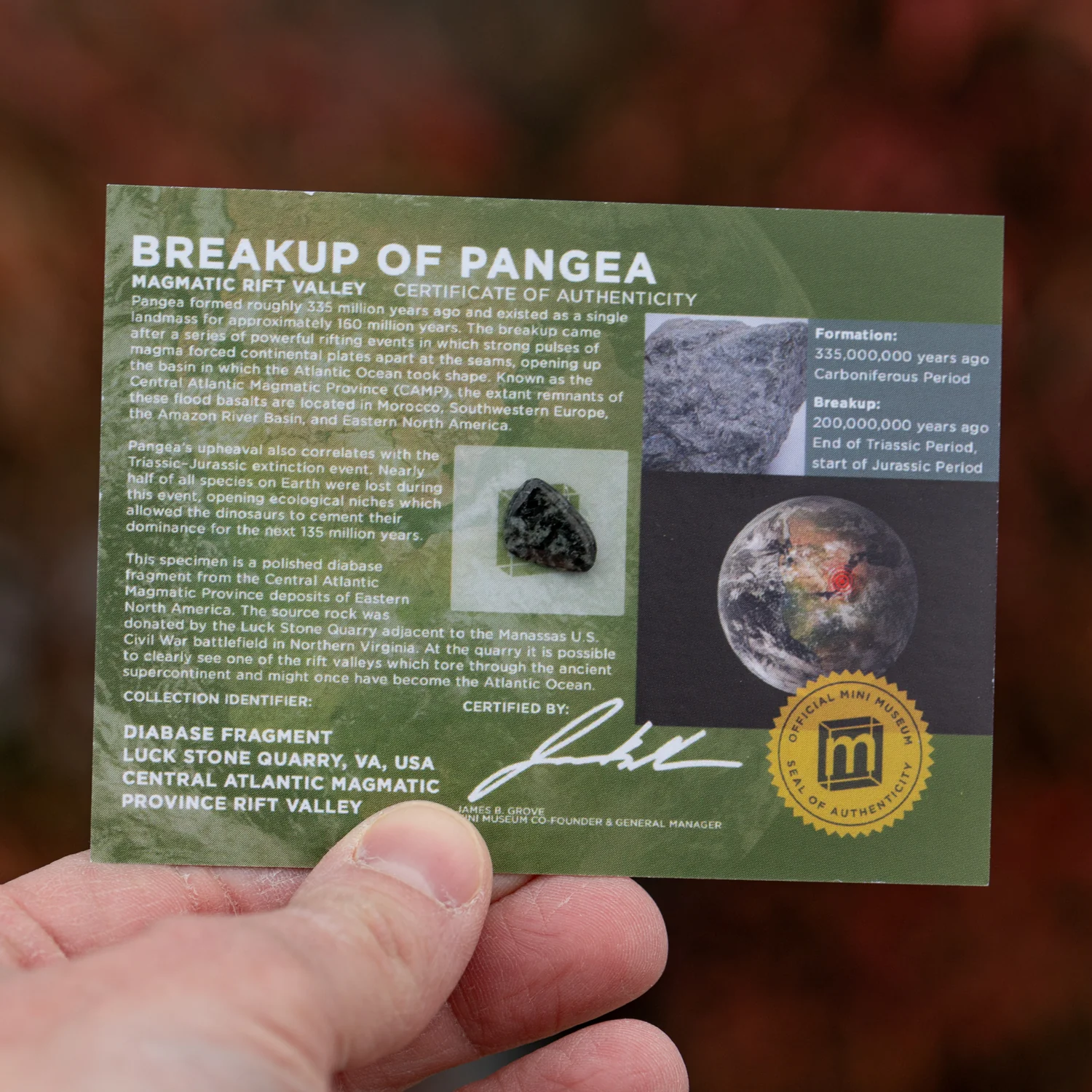
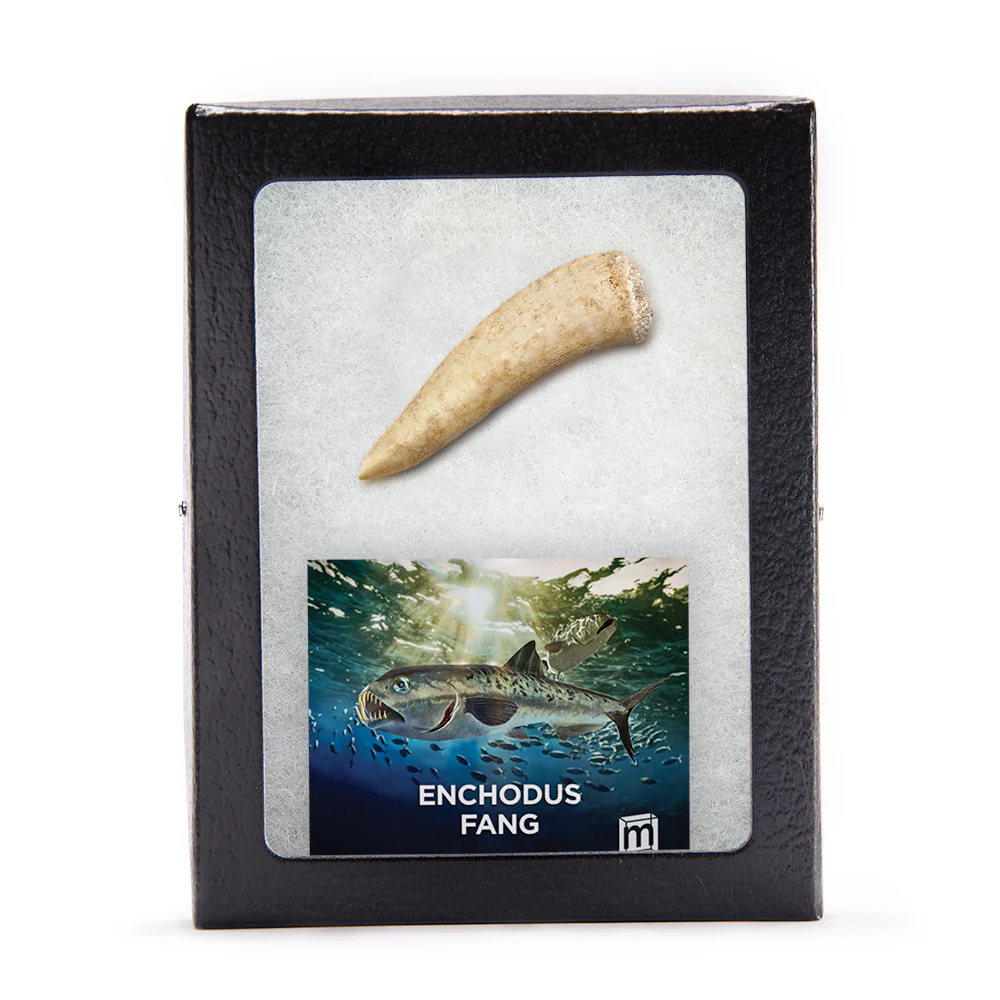
Above: Front of the Specimen Card
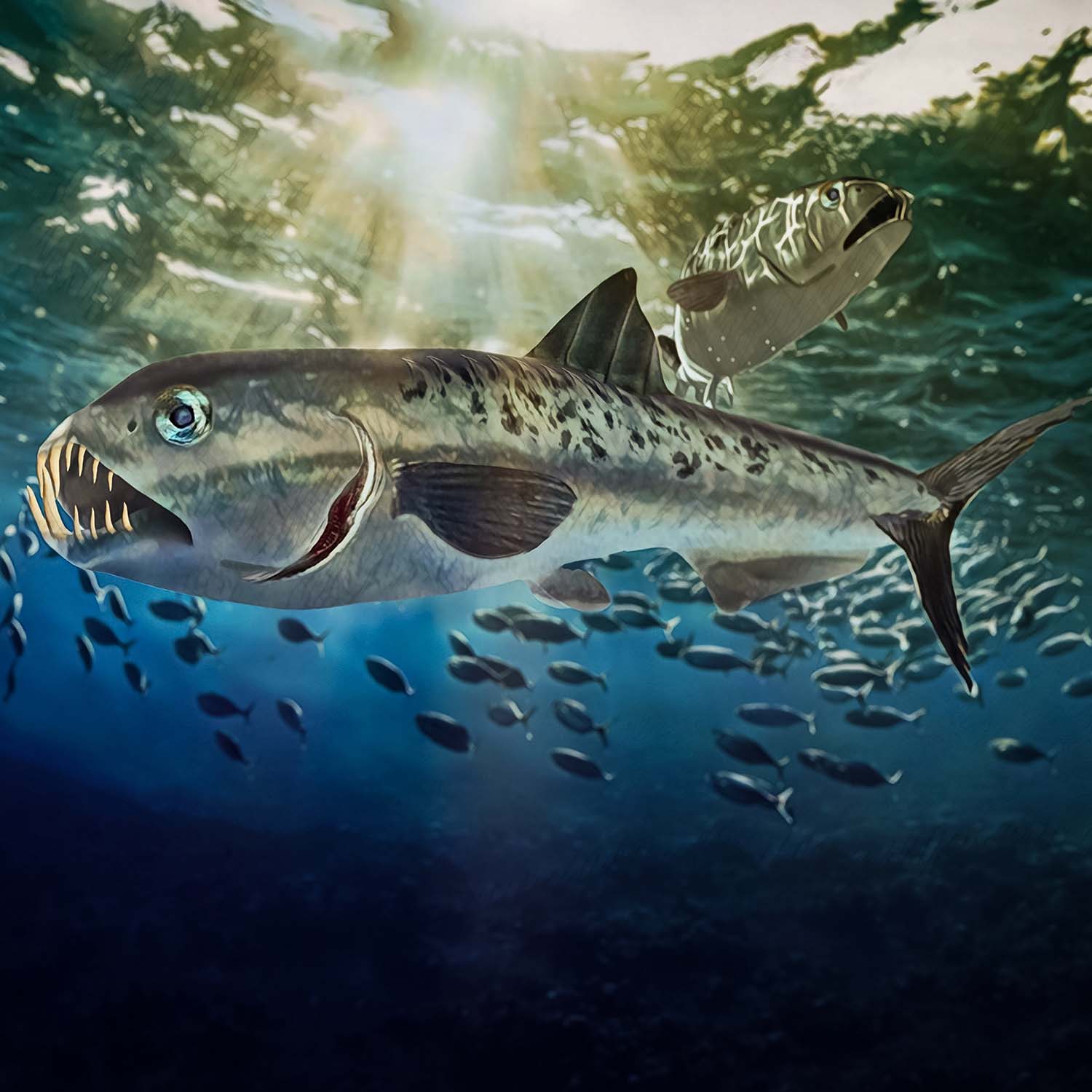
While prehistoric fish came in all shapes and sizes, Enchodus stands out from the crowd thanks to its serious bite. While this Cretaceous period fish was by no means the most massive or dangerous predator of its time, it still struck a fearsome appearance with four elongated teeth that protruded from its mouth like fangs. These teeth could grow up to 2.4 inches, and earned Enchodus the nickname: “the saber-toothed herring,” though it is more closely related to modern trout and salmon.

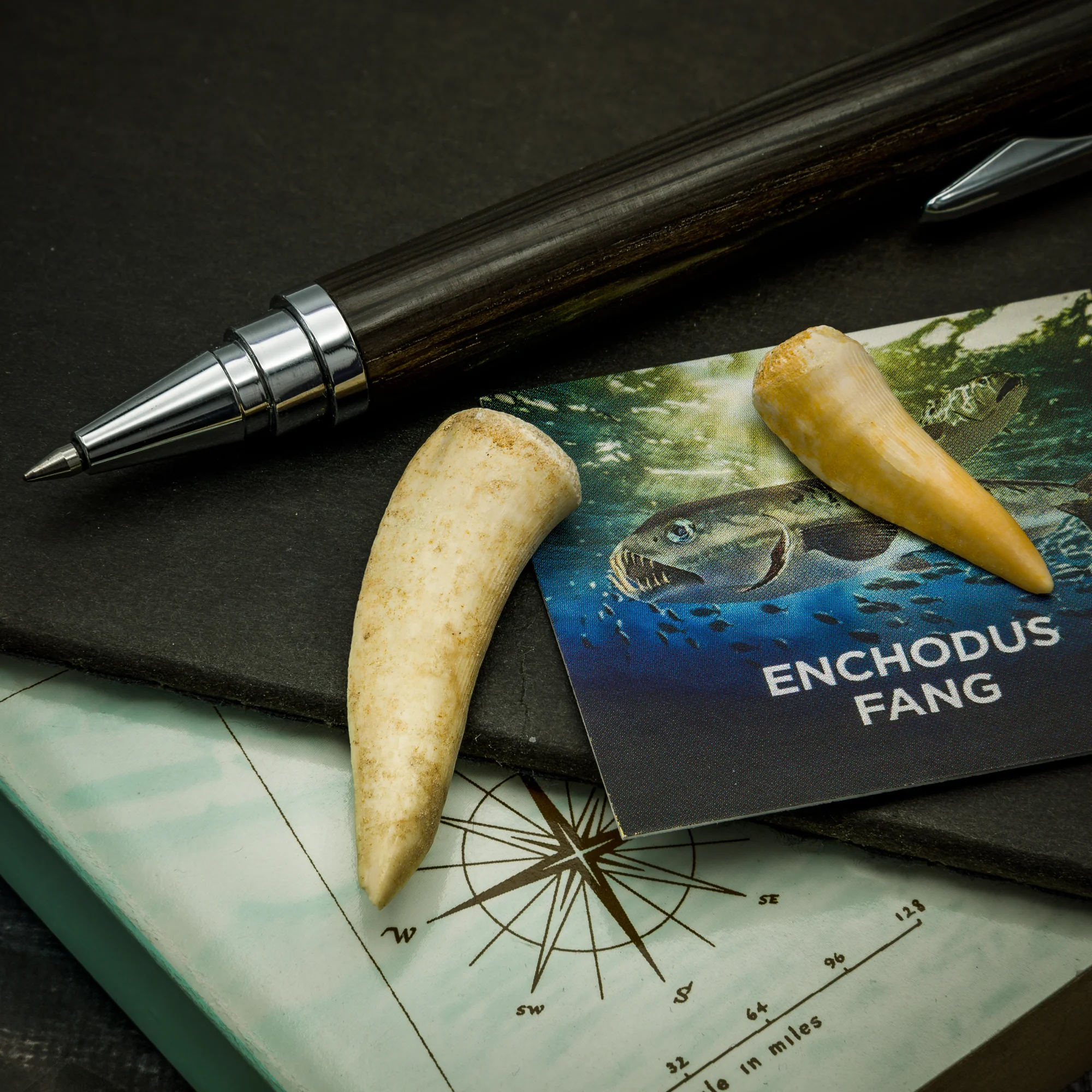
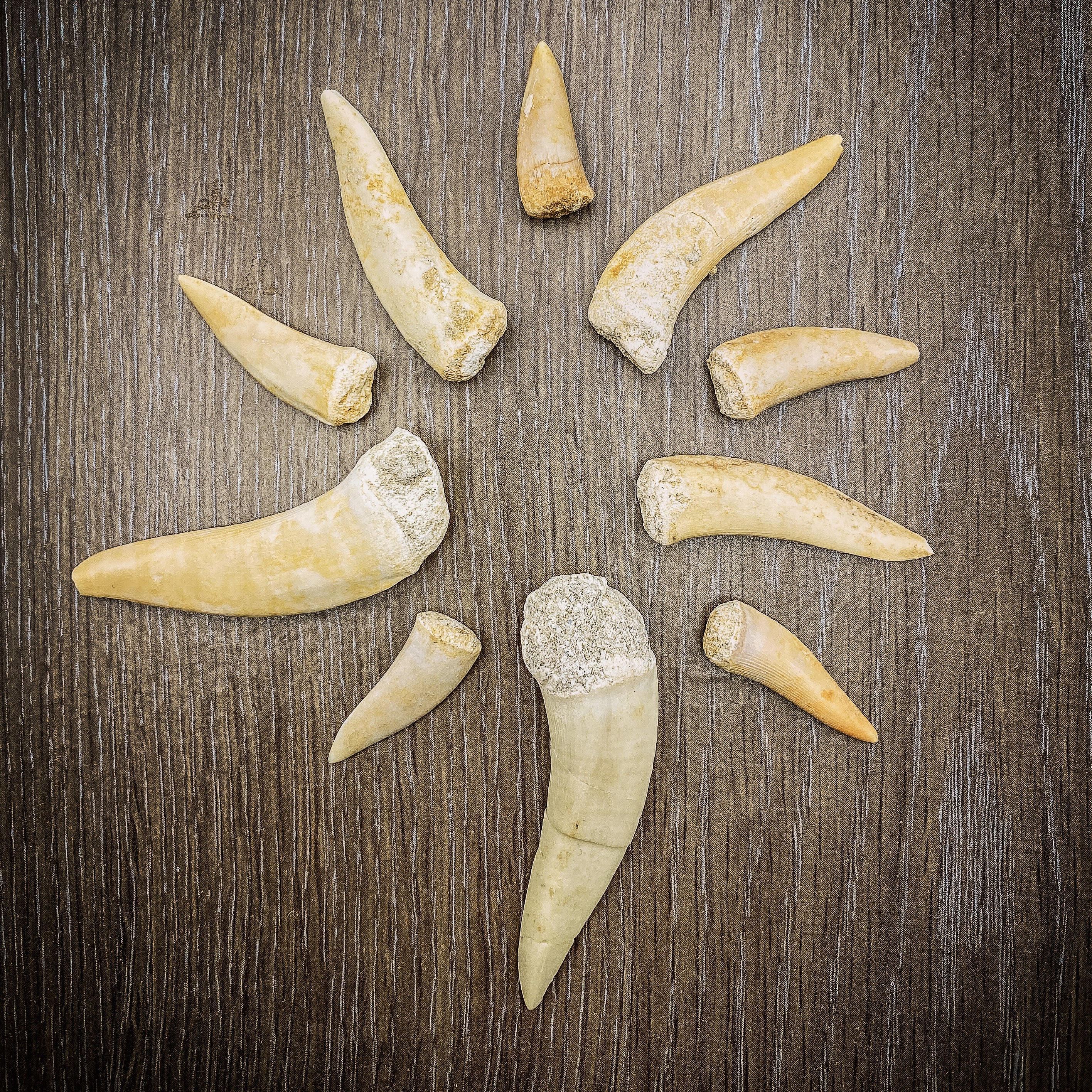
Above: Large and Small Enchodus fang specimens.
Species of Enchodus were able to survive past the K-Pg boundary, the extinction event which ended the dinosaurs as well as many of Enchodus’ contemporary predators, and would continue to appear in the fossil record until the late Eocene. For at least 63 million years, Enchodus and its powerful fangs could be found across the ancient seas.
This specimen is a single Enchodus fang from Cretaceous Period deposits in Morocco. The fangs come in two different sizes:
- Small: 3/4 to 1 1/4 inches(~2-3 cm)
- Large: 1 1/2 to 2 inches (~4-5 cm)
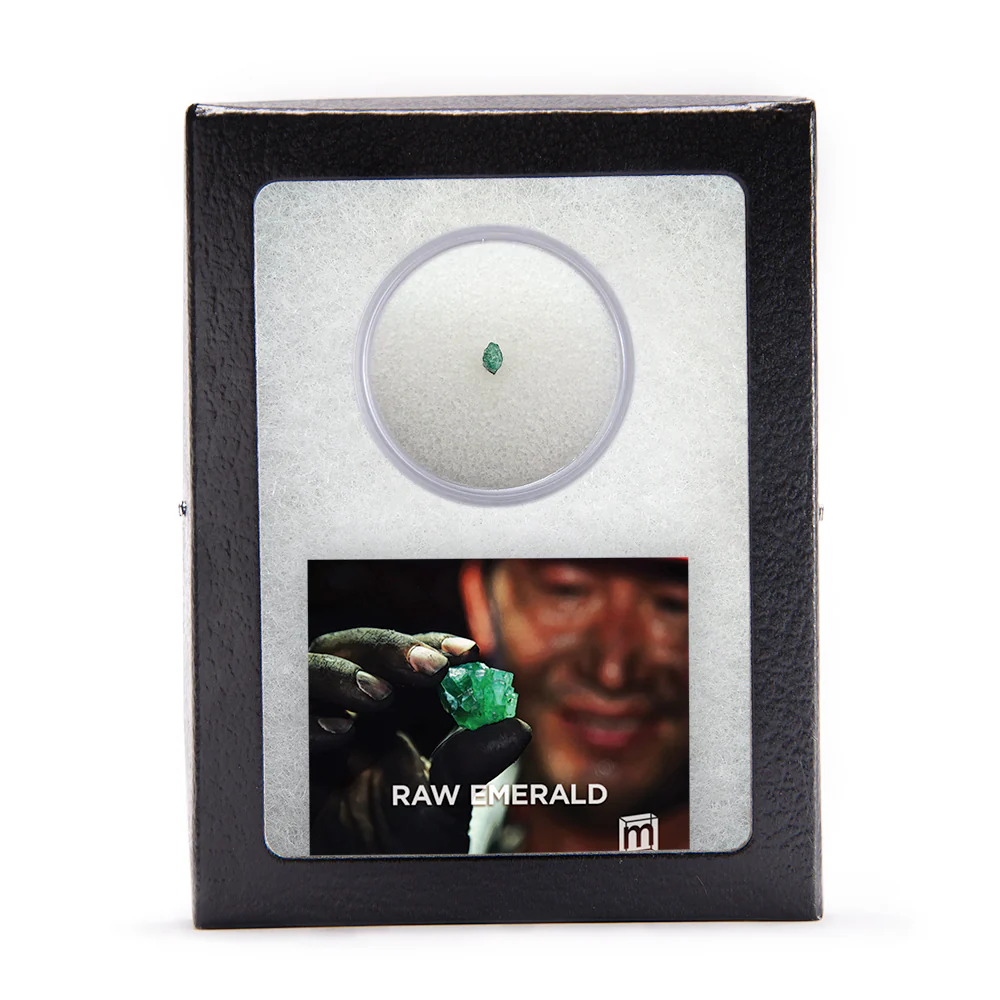
The specimen is encased within a glass-topped riker display box. The box measures 4 1/2" x 3 1/2". A small information card is also included, which serves as the certificate of authenticity.
Please note: All fangs will show some sign of repair. In addition, to protect the specimen during transit every Enchodus tooth is individually wrapped.
On receipt, simply open the top of the case and unwrap the tooth and then arrange the fang inside the case as pictured here on the site. We also recommend placing the bubble wrap under the soft, white lining of the case. This extra padding will keep the tooth snug in the case after the lid is secured.
Original: $29.00
-70%$29.00
$8.70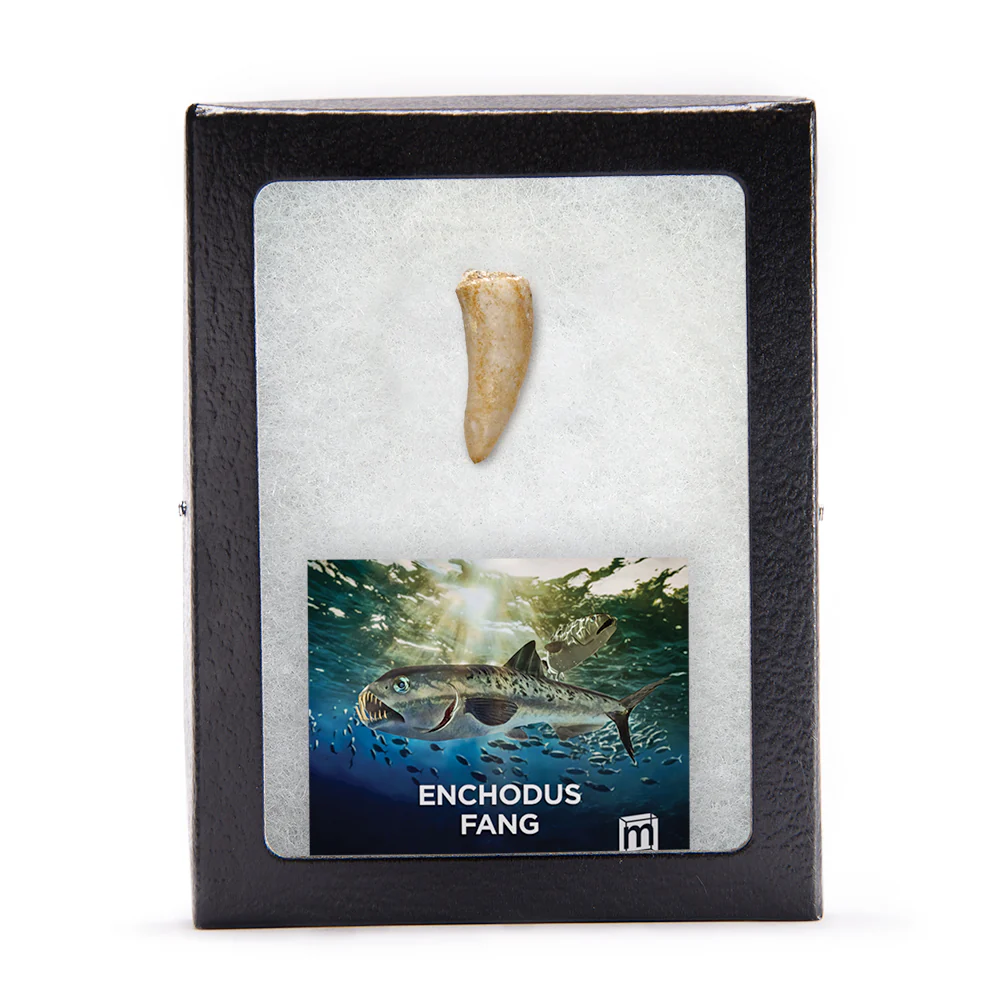
Description
Above: Front of the Specimen Card
While prehistoric fish came in all shapes and sizes, Enchodus stands out from the crowd thanks to its serious bite. While this Cretaceous period fish was by no means the most massive or dangerous predator of its time, it still struck a fearsome appearance with four elongated teeth that protruded from its mouth like fangs. These teeth could grow up to 2.4 inches, and earned Enchodus the nickname: “the saber-toothed herring,” though it is more closely related to modern trout and salmon.
Above: Large and Small Enchodus fang specimens.
Species of Enchodus were able to survive past the K-Pg boundary, the extinction event which ended the dinosaurs as well as many of Enchodus’ contemporary predators, and would continue to appear in the fossil record until the late Eocene. For at least 63 million years, Enchodus and its powerful fangs could be found across the ancient seas.
This specimen is a single Enchodus fang from Cretaceous Period deposits in Morocco. The fangs come in two different sizes:
- Small: 3/4 to 1 1/4 inches(~2-3 cm)
- Large: 1 1/2 to 2 inches (~4-5 cm)
The specimen is encased within a glass-topped riker display box. The box measures 4 1/2" x 3 1/2". A small information card is also included, which serves as the certificate of authenticity.
Please note: All fangs will show some sign of repair. In addition, to protect the specimen during transit every Enchodus tooth is individually wrapped.
On receipt, simply open the top of the case and unwrap the tooth and then arrange the fang inside the case as pictured here on the site. We also recommend placing the bubble wrap under the soft, white lining of the case. This extra padding will keep the tooth snug in the case after the lid is secured.