Muhammad Ali Punching Bag
This specimen first appeared in the Fourth Edition of the Mini Museum. We are proud to offer it as a stand-alone specimen!

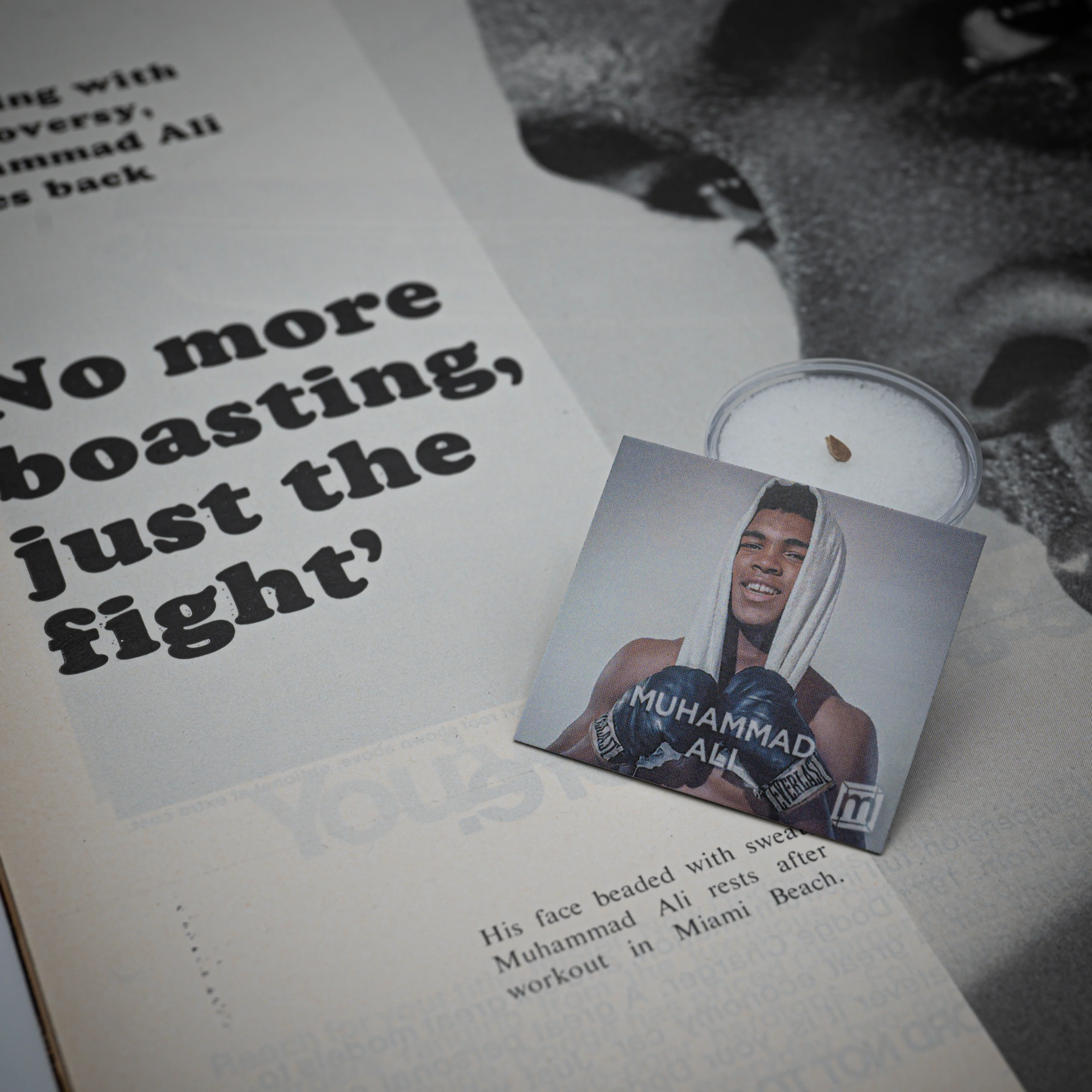
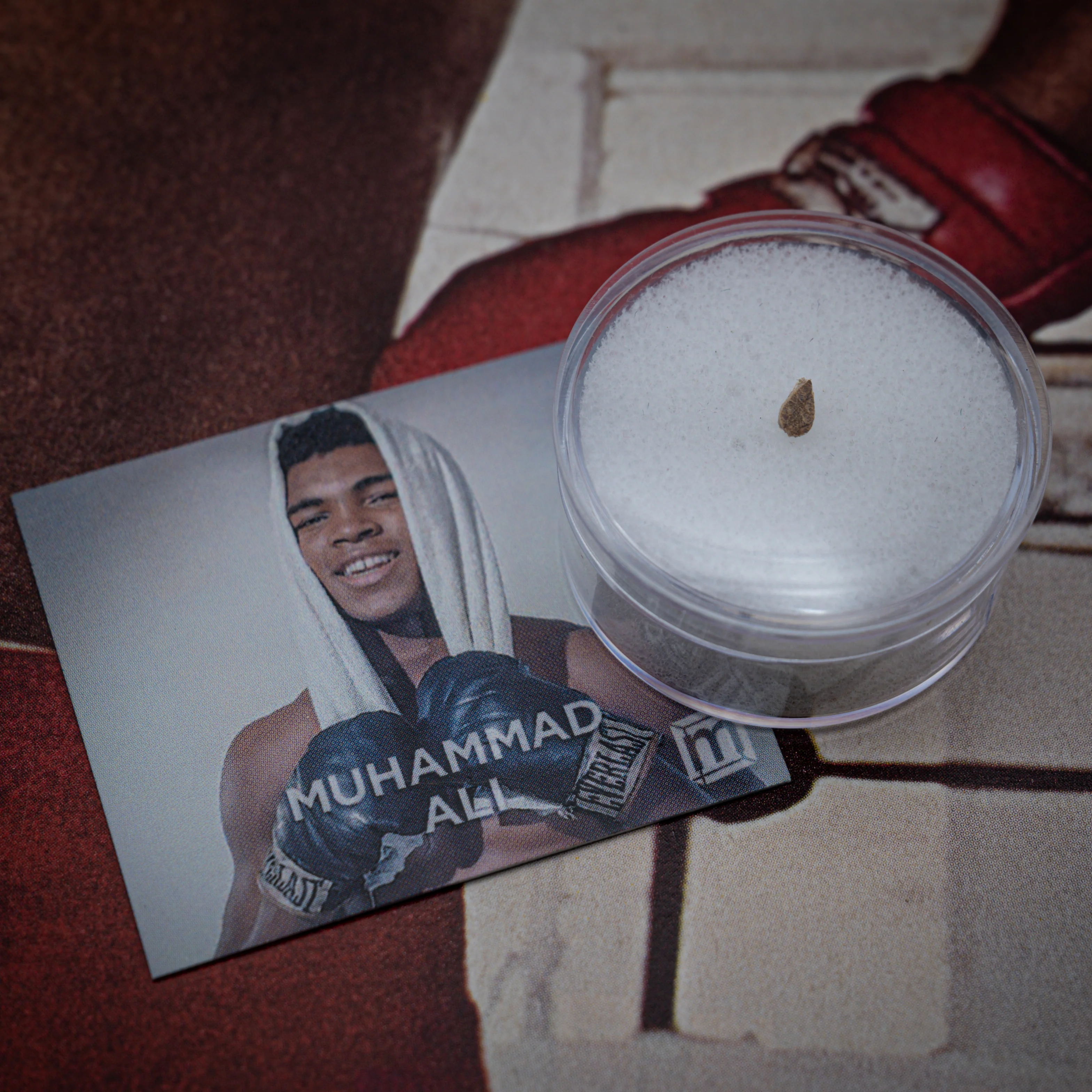
Above: Front of the Specimen Card
In 1964, a loud, handsome boxer from Louisville, Kentucky shocked the sporting world by beating the reigning heavyweight champion of the world. The new champion's name was Cassius Marcellus Clay, Jr. and he was just 22 years old. The day after the fight, Clay announced to the press that he was a Muslim and confirmed rumors that he had joined the Nation of Islam. Ten days later, the champion was introduced to the world by a new name: Muhammad Ali.
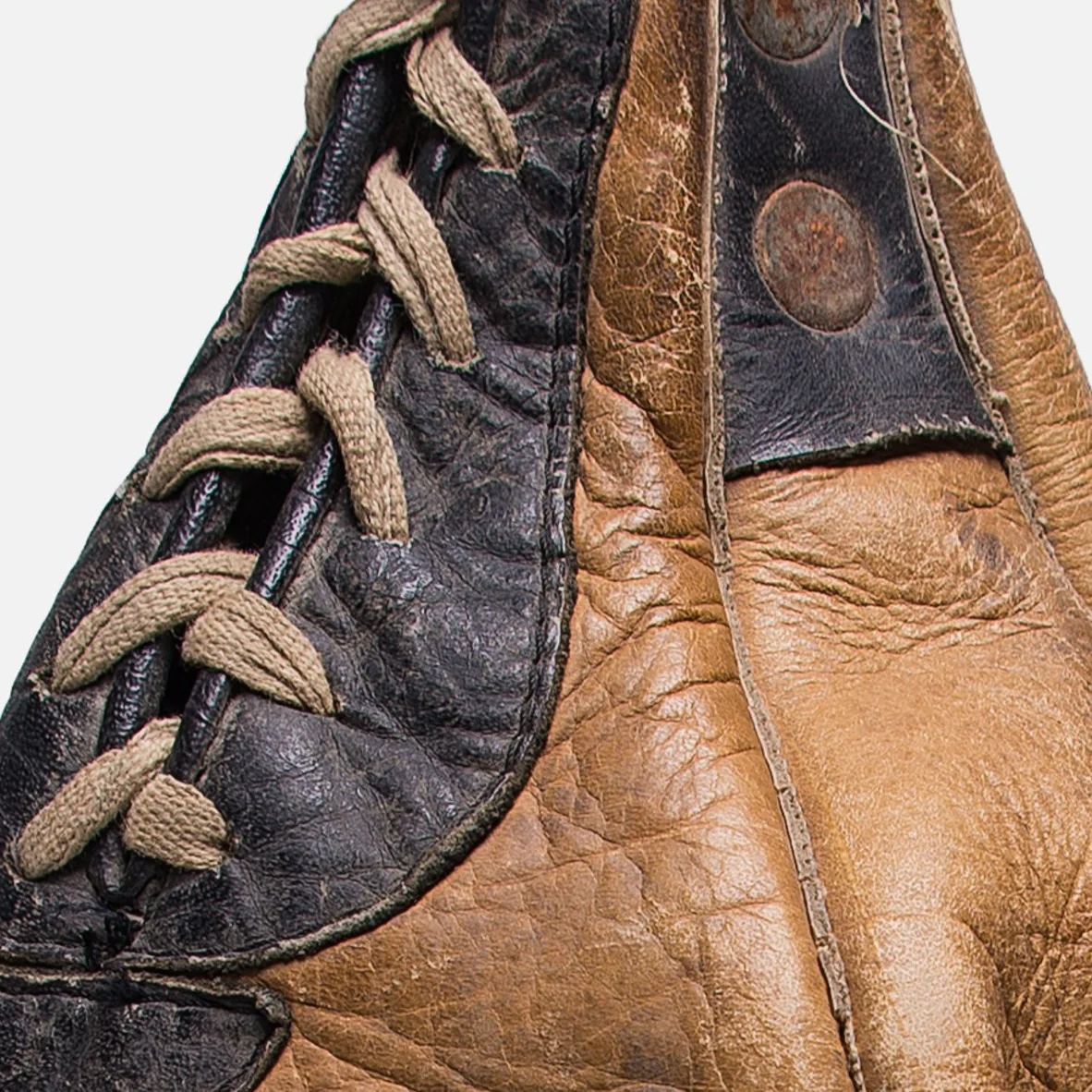
This specimen comes from a punching bag formerly used by Muhammad Ali. Known as a double-end or "crazy" bag, this particular type of punching bag is used to improve accuracy, speed, and endurance.

The double-end bag is attached at two ends with floor-to-ceiling elastic straps. This makes the bag highly reactive to punches, which is useful in developing defensive skills, as the bag is prone to "hit back". This particular bag was used by Muhammad Ali during training sessions in the 1970's. The bag was gifted to long-time Louisville sports radio personality and friend of Muhammad Ali, John Ramsey, and later purchased at auction by Mini Museum. It first appeared in the Fourth Edition of the Mini Museum.

Above: Muhammad Ali training in 1973. Note: This is not the same bag. We just like this picture.
Each specimen is hand-punched with a custom-made "punching bag" shaped die. The specimens are then split by hand and reviewed by members of the team.

Above: Preparing specimens in the workshop.
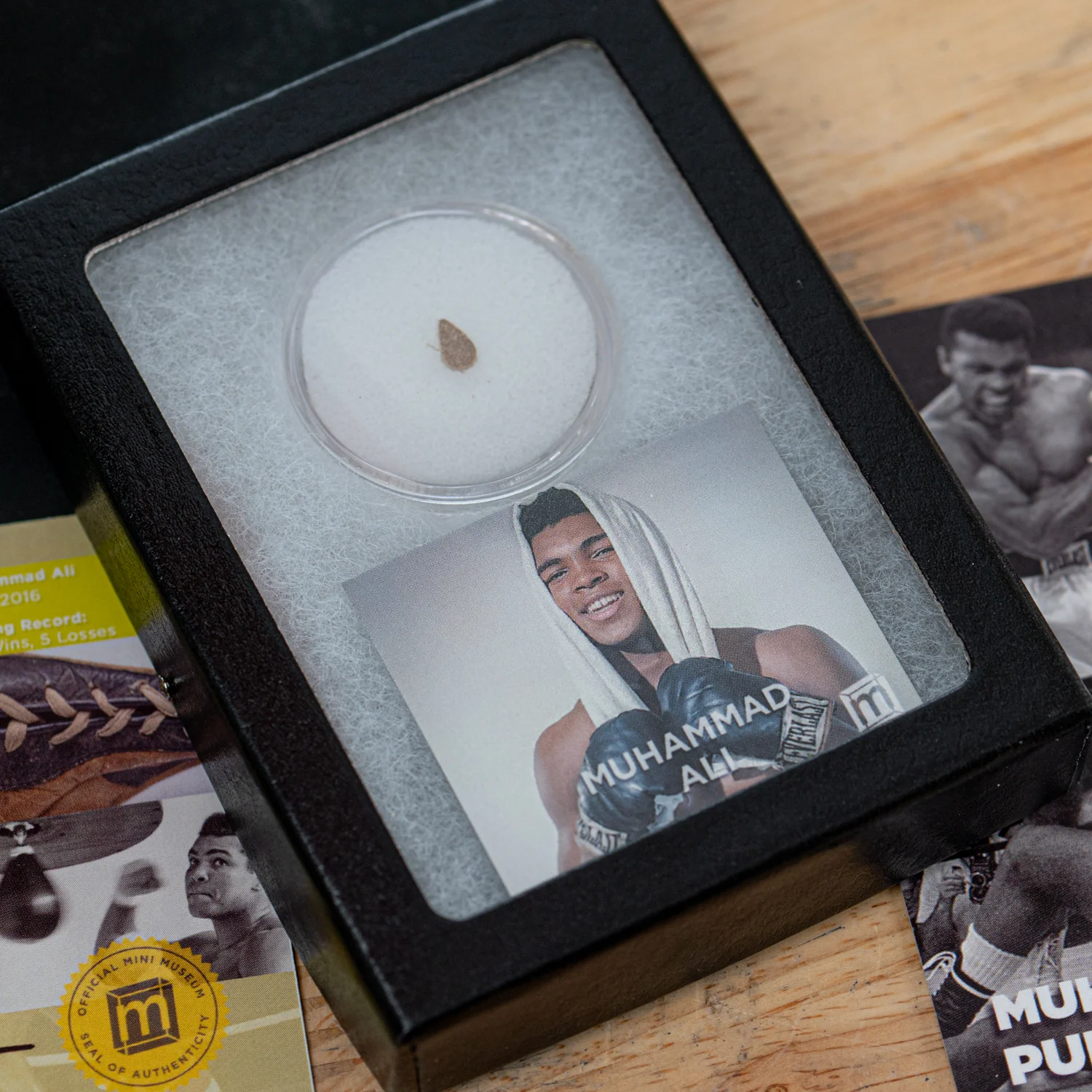
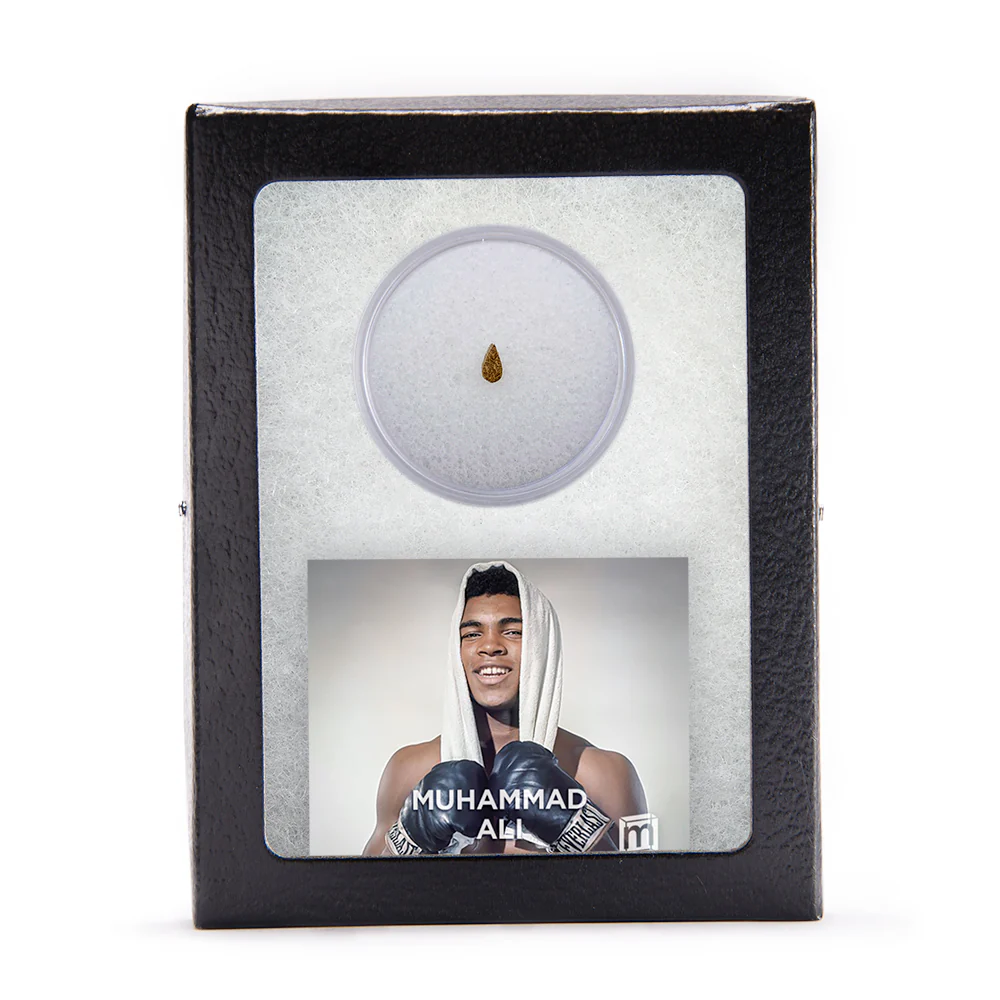
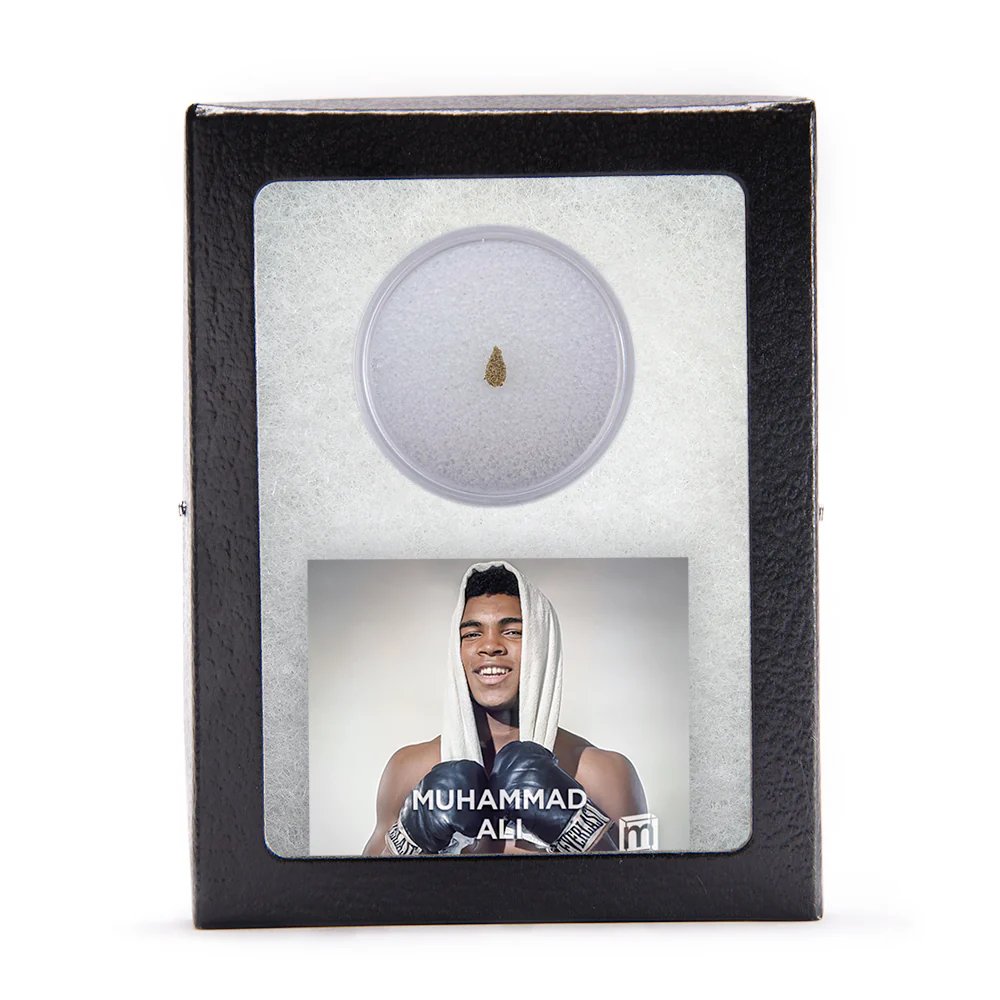
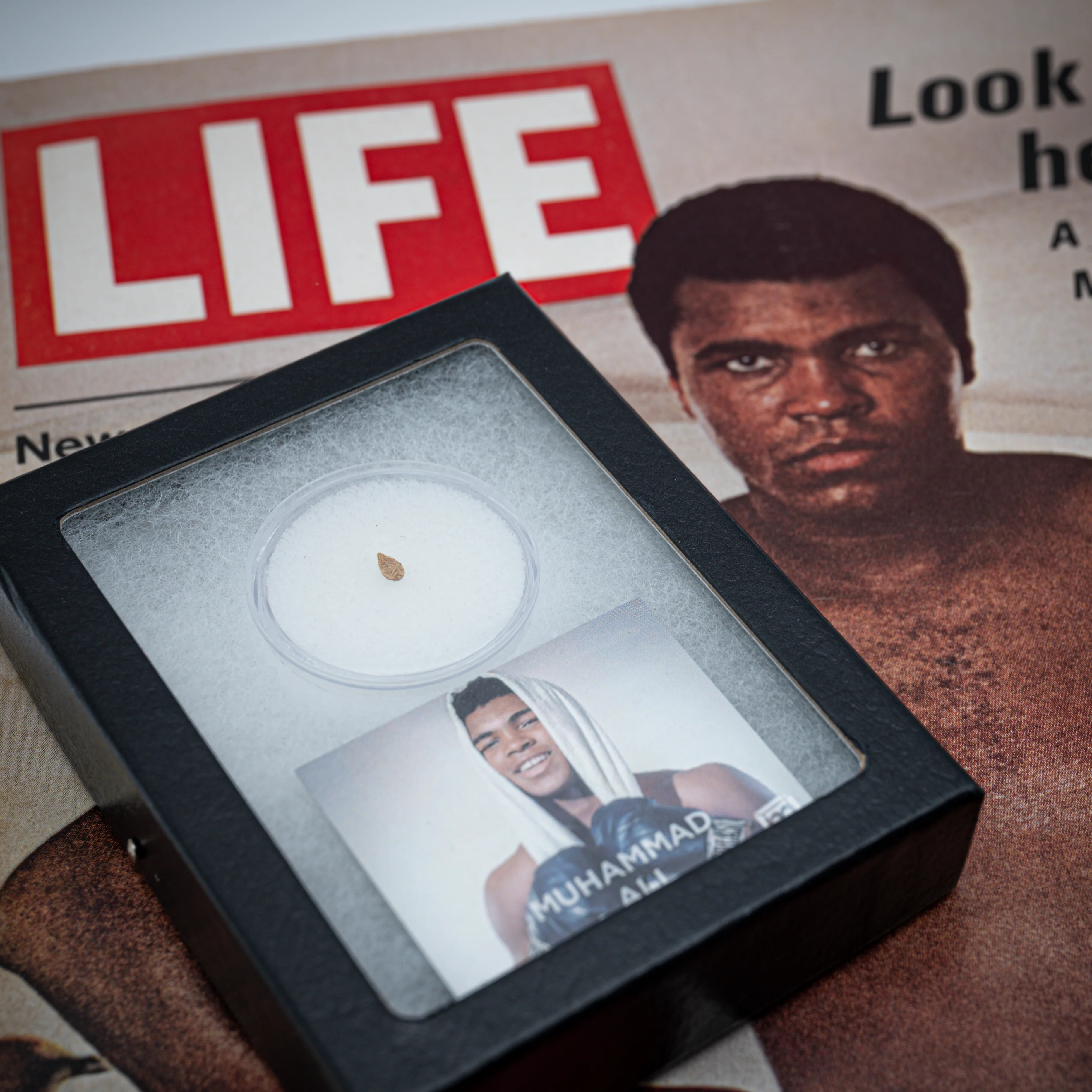
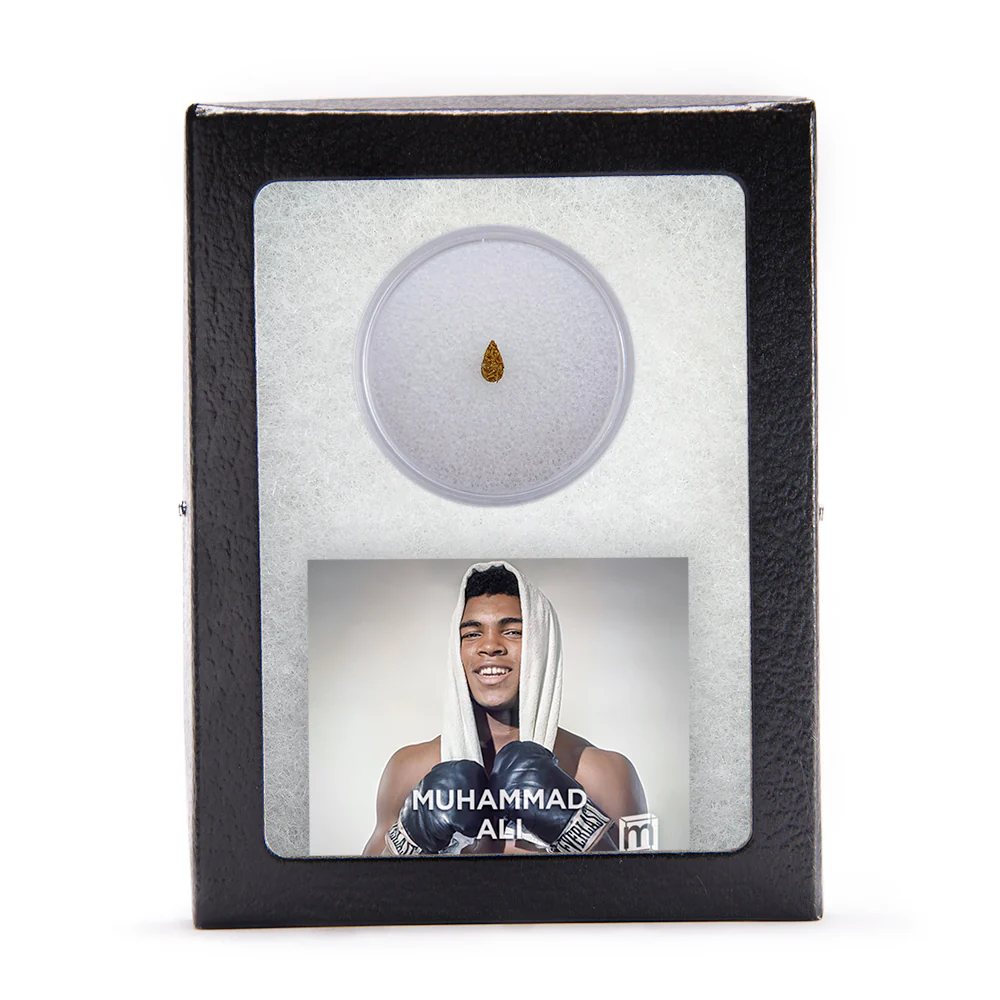
The specimens measure approximately 5x2 millimeters and each is encased inside an acrylic specimen jar and presented in one of our classic, glass-topped riker display boxes. The riker display box measures 4 1/2" x 3 1/2". A small information card is also included, which serves as the certificate of authenticity.

Above: The specimen with Life Magazine October 23, 1970 celebrating Ali's return to the ring.
Please Note: This specimen is quite small and being leather it will fray over time. We recommend keeping it in the acrylic jar to avoid fragmentation.
Description
This specimen first appeared in the Fourth Edition of the Mini Museum. We are proud to offer it as a stand-alone specimen!
Above: Front of the Specimen Card
In 1964, a loud, handsome boxer from Louisville, Kentucky shocked the sporting world by beating the reigning heavyweight champion of the world. The new champion's name was Cassius Marcellus Clay, Jr. and he was just 22 years old. The day after the fight, Clay announced to the press that he was a Muslim and confirmed rumors that he had joined the Nation of Islam. Ten days later, the champion was introduced to the world by a new name: Muhammad Ali.
This specimen comes from a punching bag formerly used by Muhammad Ali. Known as a double-end or "crazy" bag, this particular type of punching bag is used to improve accuracy, speed, and endurance.
The double-end bag is attached at two ends with floor-to-ceiling elastic straps. This makes the bag highly reactive to punches, which is useful in developing defensive skills, as the bag is prone to "hit back". This particular bag was used by Muhammad Ali during training sessions in the 1970's. The bag was gifted to long-time Louisville sports radio personality and friend of Muhammad Ali, John Ramsey, and later purchased at auction by Mini Museum. It first appeared in the Fourth Edition of the Mini Museum.
Above: Muhammad Ali training in 1973. Note: This is not the same bag. We just like this picture.
Each specimen is hand-punched with a custom-made "punching bag" shaped die. The specimens are then split by hand and reviewed by members of the team.
Above: Preparing specimens in the workshop.
The specimens measure approximately 5x2 millimeters and each is encased inside an acrylic specimen jar and presented in one of our classic, glass-topped riker display boxes. The riker display box measures 4 1/2" x 3 1/2". A small information card is also included, which serves as the certificate of authenticity.
Above: The specimen with Life Magazine October 23, 1970 celebrating Ali's return to the ring.
Please Note: This specimen is quite small and being leather it will fray over time. We recommend keeping it in the acrylic jar to avoid fragmentation.